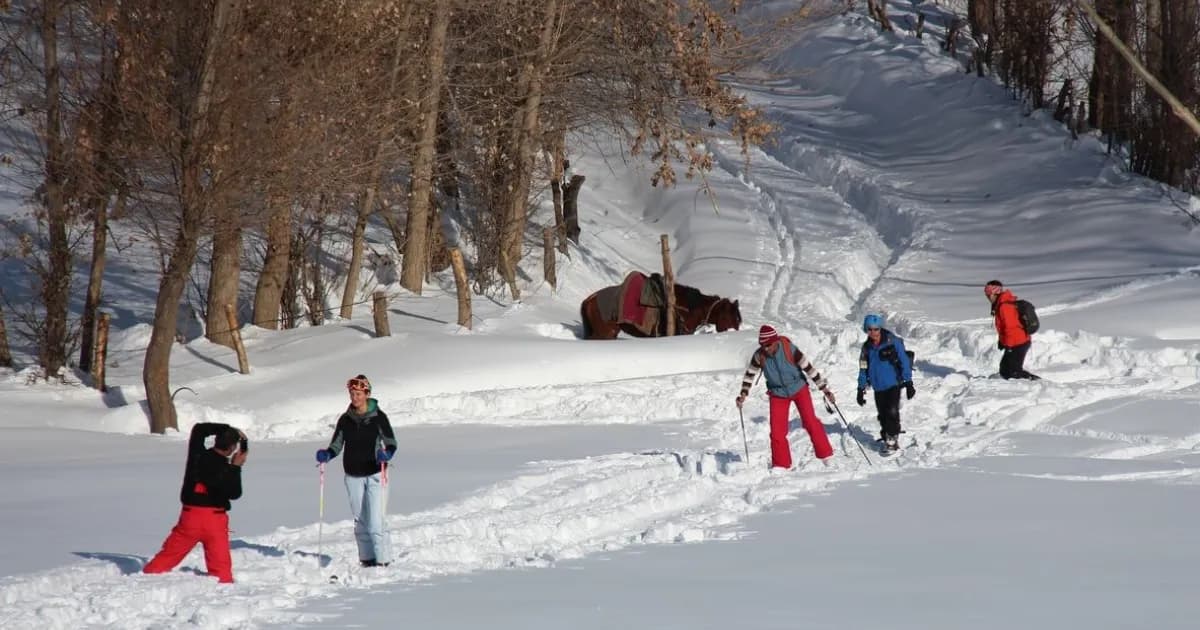
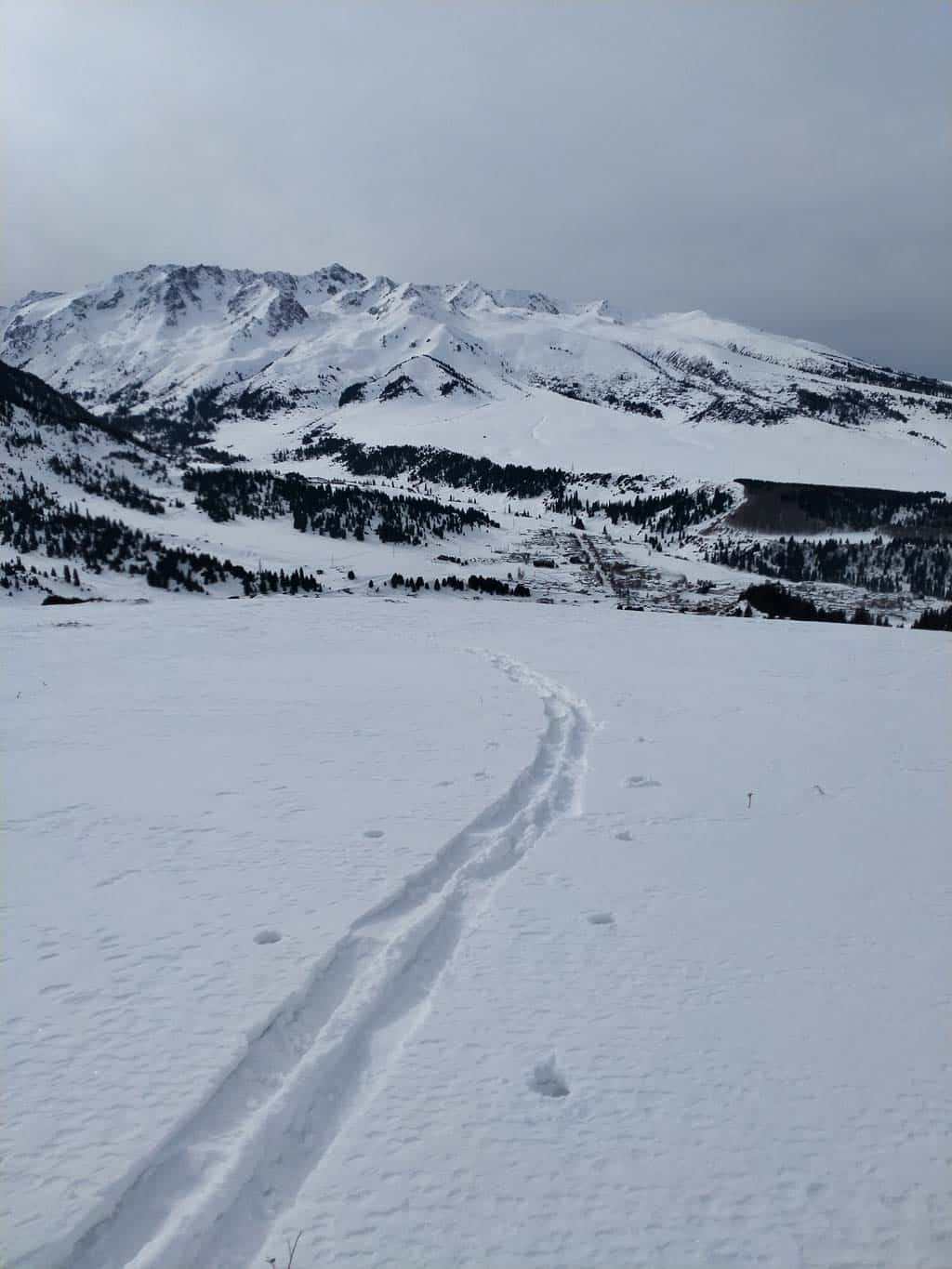
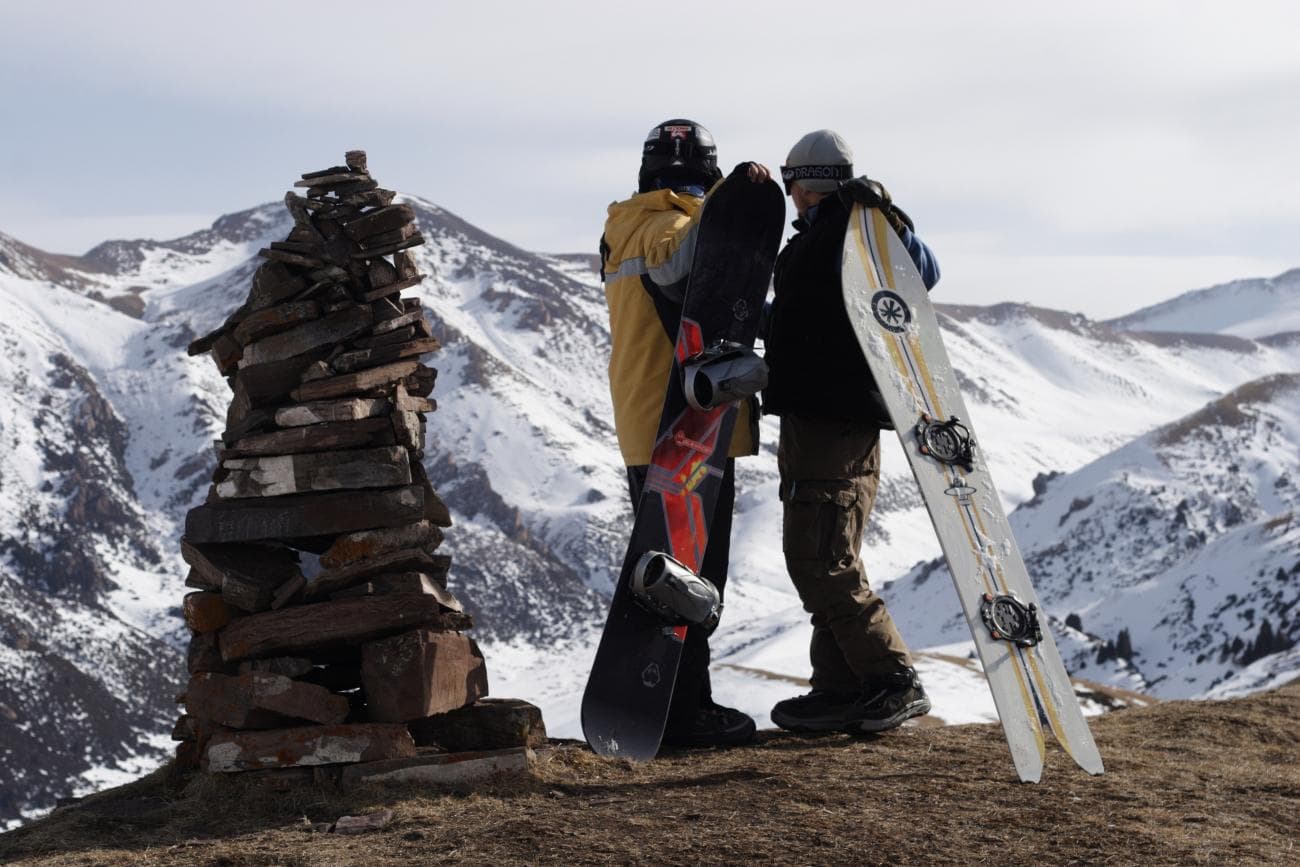
Kyrgyzstan is the country where Silk Road Freeride feels most grounded and most convincing at the same time. The mountains are large enough to make the route feel genuinely serious, but the travel still stays close to village life, local hosting, and the kind of human-scale interaction that gives the corridor its identity. This is not a destination you choose for polished resort luxury. You choose it because the terrain is real, the movement through the country matters, and the trip keeps reminding you that winter travel can still feel adventurous.
The route logic inside Kyrgyzstan is one of its biggest strengths. Karakol is the clearest all-round base: resort structure, freeride credibility, and a real town below the ski area. Jyrgalan changes the mood toward quieter village-based backcountry and catski travel. Suusamyr opens into a more powder-basecamp and high-valley format where the skiing becomes bigger, barer, and more guide-led. Arslanbob then shifts the country again toward a more cultural, village, and touring-oriented frame in the south. Those locations are not interchangeable. Together they make Kyrgyzstan one of the few countries in the current system that can support almost every winter trip style Silk Road Freeride cares about.
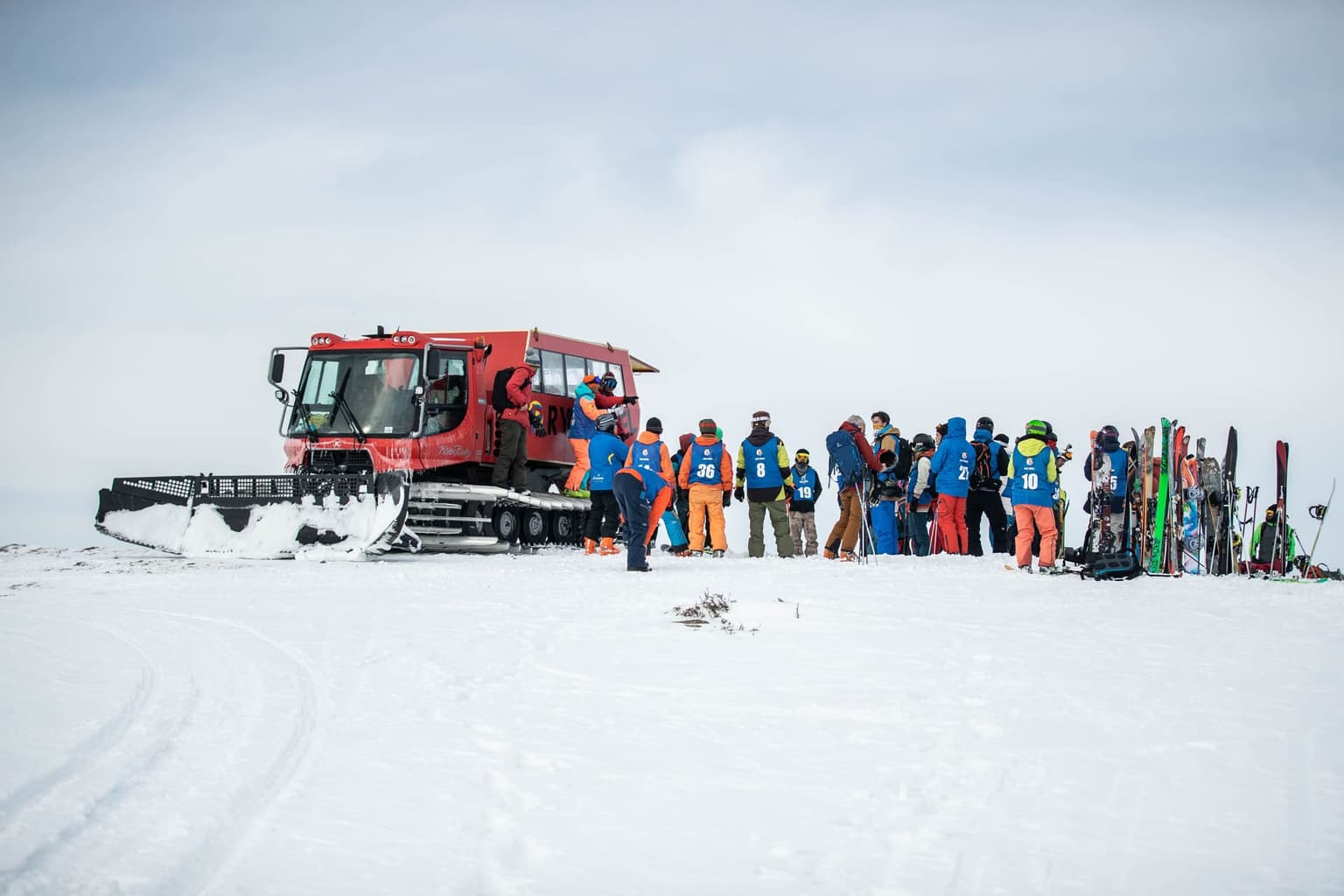
That is what makes Kyrgyzstan stronger than a simple “powder destination” label. It can do resort-based freeride, catski, heliski, touring, road-accessed mountain travel, and slower expedition-style itineraries. It can work for riders wanting a main base and repeated laps, but it also suits route-based travelers who want the trip to unfold through multiple places with different terrain characters. This is especially important because the country is not one single weather or infrastructure experience. The destination becomes more compelling once it is treated as a network of formats rather than as one uniform snow product.
It also has the clearest fit for riders who want character over convenience. Kyrgyzstan suits people who are comfortable trading seamless resort polish for better terrain access, stronger local texture, and a more memorable overall journey. It works for travelers who can handle long transfers, shifting infrastructure quality, and day-to-day logistics that sometimes depend on people more than systems. It is less ideal for visitors who want everything standardized, highly polished, and easy to package into a short, low-friction resort break.
Seasonality deserves clearer explanation here too. Midwinter is the broadest safe answer, but different products mature differently. Resort-based travel can feel reliable in the core winter months, while higher freeride and touring goals may depend more on local weather windows and guide judgment. Because much of the destination value lies outside purely marked resort terrain, snowpack, access, avalanche context, and mountain decision-making matter more than broad “best month” marketing language. That is why local support is not optional background detail here; it is part of what makes the destination work.
In the wider Silk Road Freeride route, Kyrgyzstan is the country that most fully justifies the project’s existence. It connects the adventure, the freeride terrain, the cultural depth, and the route logic into one place. If Georgia is the most balanced destination and China is the most frontier-scaled, Kyrgyzstan is the one that most clearly proves that a freeride corridor through Central Asia can be real, coherent, and worth returning to.